Interview with Jeffrey Angles, translator of The Luminous Fairies and Mothra
About The Luminous Fairies and Mothra
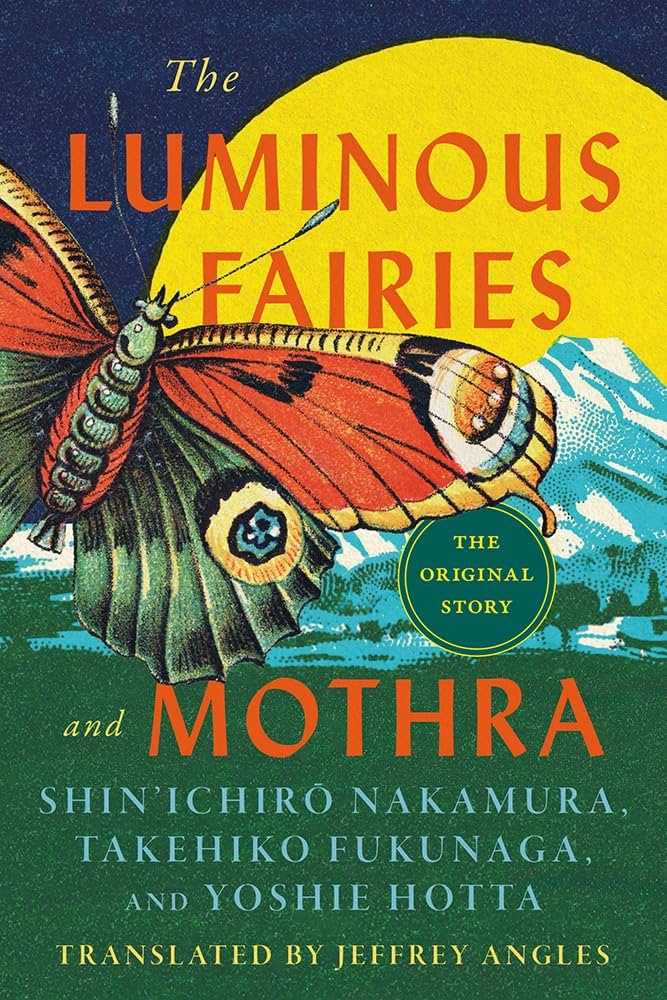
The original story that hatched Mothra, one of the most beloved monsters in the “kaijuverse”—available in English for the first time
Mystical and benevolent, the colossal lepidopteran Mothra has been one of the most beloved kaiju since 1961, when The Luminous Fairies and Mothra was originally published in Japanese. Commissioned by Tōhō Studios from three of Japan’s most prominent postwar literary writers (Shin’ichirō Nakamura, Takehiko Fukunaga, and Yoshie Hotta), the novella formed the basis for the now-classic monster film Mothra, with a protagonist second only to Godzilla in number of film appearances by a kaiju. Finally available in its first official English translation, The Luminous Fairies and Mothra will captivate ardent, longtime fans of the films as well as newcomers.
Written just months after the largest political demonstrations Japan had ever seen, The Luminous Fairies and Mothra reflects the rebellious spirit of the time. In this original story, explorers visit a South Pacific island and capture a group of fairies, inciting the fury of the goddess Mothra, who sets out for Japan on a mission of rescue and revenge. Expressing a powerful social stance about Japan’s need to chart its own foreign policy during the Cold War, the novella’s political message was ultimately toned down in the Tōhō Studios film. Through this translation, Anglophone audiences will discover Mothra as a figure of protest fiction intricately reflecting the complex geopolitical situation in early 1960s Japan.
The Luminous Fairies and Mothra is translated into lively prose by Jeffrey Angles, who also wrote an extensive afterword about the novella’s cultural context, the unusual story of its composition, and the development of the 1961 film. Following Angles’s best-selling translation of the original Godzilla novellas, this new work will once again delight kaiju fans everywhere.
You can purchase The Luminous Fairies and Mothra and more from the University of Minnesota Press or your local bookshop.
Why I love The Luminous Fairies and Mothra
I have always loved black and white movies. I used to stay up way later than any child should reasonably be awake and watch the Turner Classic Movie channel on TV. It was there that I saw some of my first creature-feature films. It wasn’t until college when I finally saw the original, 1954 Godzilla, though. After that, I watched every Toho Company film I could find. This was made so easy with the rise of streaming services. I no longer had to wait for TMC to decide to show another pulpy sci-fi late at night.
I became obsessed. I studied the Godzilla eras and became a little annoying whenever Godzilla was brought up. My friends were never quite as into the movies as I was, but I told them everything I found out. My boyfriend, now husband, still has to endure these geek-out moments.
This translation is the first time I have read anyting about Mothra. I’ve seen Mothra movies, but all the things I’ve read were about Godzilla and the Toho Company. Mothra seems to have a rich history to it. In The Luminous Fairies and Mothra Angles goes into the background of how the novella was written (by three diffrent men), what political and social insights can be pulled from it, and even a strange connection to Doctor Dolittle. Not to mention the actual novella itself. I see the movie in the text but there is so much more in the 50 or so pages that make up the original novella.
I’m going to have to go back and rewatch every Mothra movie I can find. Will they reference Mothra’s gender? What about the origin story? Will I be able to sense the US-Russian tension more now that Angles has pointed it out in the last part of the novella? It’s going to be a fun holiday!
 © 2025 UpperPen Podcast | hosted by Dakota VanLinden
Leave a comment